This post contains affiliate links. If you buy through them, this site may earn a small commission at no extra cost to you. Learn more.
You do not need to spend hundreds of dollars to own a real Japanese chef’s knife. Several long-established makers in Seki and Niigata make gyuto knives in Japan for under $150.
Every knife below is from a Japanese maker that manufactures in Japan. All are stainless or stain-resistant, so they suit everyday home cooking. Prices move around, so treat the figures as a rough guide and check the current price before you buy.
Quick comparison
| Knife | Made in | Steel | Handle | Rough price |
|---|---|---|---|---|
| Tojiro DP gyuto 210 mm | Niigata | VG-10 core, stainless cladding | Western | Under $100 |
| Kai Seki Magoroku 10000CL gyuto | Seki, Gifu | Stainless (layered) | Western, wood-look | Under $100 |
| Misono Molybdenum gyuto 210 mm | Seki, Gifu | Molybdenum stainless | Western | About $100 to $125 |
| Global G-2 chef’s knife | Niigata | Cromova 18 stainless | One-piece steel | Varies, often close to $150 |
| MAC Professional MBK-85 (just over budget) | Seki, Gifu | High-carbon stainless | Western | Around $160 |
Best overall: Tojiro DP gyuto 210 mm
If you want one recommendation, this is it. Tojiro makes its knives in Niigata, a prefecture with a long metalworking tradition, and the DP line is a popular choice for a first Japanese knife. A hard VG-10 core is sandwiched between softer stainless layers, so the edge is sharp and long-lasting while the blade stays easy to care for.
- Why it stands out: excellent sharpness and edge retention for the price
- Good to know: the handle is plain and functional rather than beautiful
- Best for: anyone buying their first real Japanese knife
Best value: Kai Seki Magoroku 10000CL gyuto
Kai is one of the largest knife makers in Seki, and Seki Magoroku is the brand you will find in ordinary Japanese department stores and kitchen shops. The 10000CL line uses a layered stainless blade and a comfortable handle, and it is very easy to live with.
- Why it stands out: a genuine Seki knife from a household-name maker, at an approachable price
- Good to know: Made in Seki, Japan
- Best for: home cooks who want a reliable everyday knife
Best for a classic Western feel: Misono Molybdenum gyuto
Misono is a respected Seki maker, and its Molybdenum series is a no-nonsense stainless gyuto with a traditional Western handle and bolster. It feels familiar to anyone coming from European knives, but with a thinner, sharper Japanese edge.
- Why it stands out: balanced, solid feel and a clean, simple design
- Good to know: the right-handed and left-handed edges differ slightly on some Misono knives, so check the listing
- Best for: cooks who like the weight and feel of a German knife
Easiest to care for: Global G-2
Global knives are made by Yoshikin at its factory in Niigata and are instantly recognizable by their one-piece stainless design with a dimpled handle. There are no seams for food to collect in, which makes cleaning simple.
- Why it stands out: light, hygienic and low maintenance
- Good to know: the metal handle can feel slippery with wet hands for some people, and the knife is lighter than many expect
- Best for: busy cooks and modern kitchens
Worth stretching for: MAC Professional MBK-85
This one usually sits just above $150, but it is worth mentioning. MAC knives from Seki are made by craftsmen in Seki, and are thin, very sharp and comfortable over long prep sessions. If your budget can stretch, it is a knife you will keep for many years.
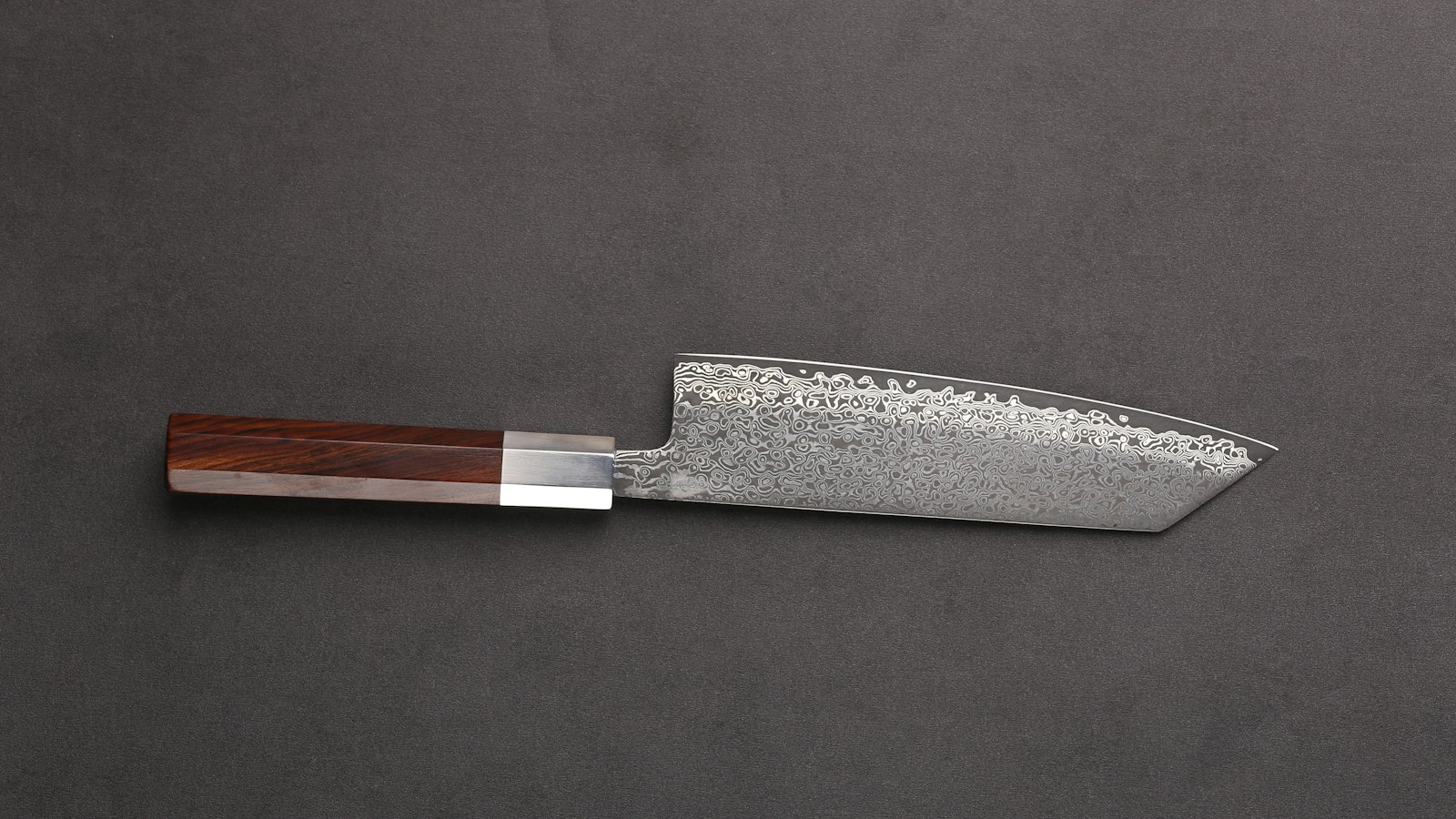
What about Damascus knives under $150?
You will see many “Damascus” Japanese-style knives in this price range. Some are fine, but many are made outside Japan, and the wavy pattern is often decorative rather than a sign of quality. If made in Japan matters to you, read how to tell a real Japanese knife from a Japanese-style one before buying.
Which one should you buy?
- Your first Japanese knife: Tojiro DP
- Lowest price from a famous Seki maker: Kai Seki Magoroku
- You like a heavier, Western feel: Misono Molybdenum
- You want the easiest cleanup: Global G-2
- You can stretch the budget: MAC Professional
Not sure a gyuto is the right shape for you? Start with gyuto vs santoku vs nakiri.